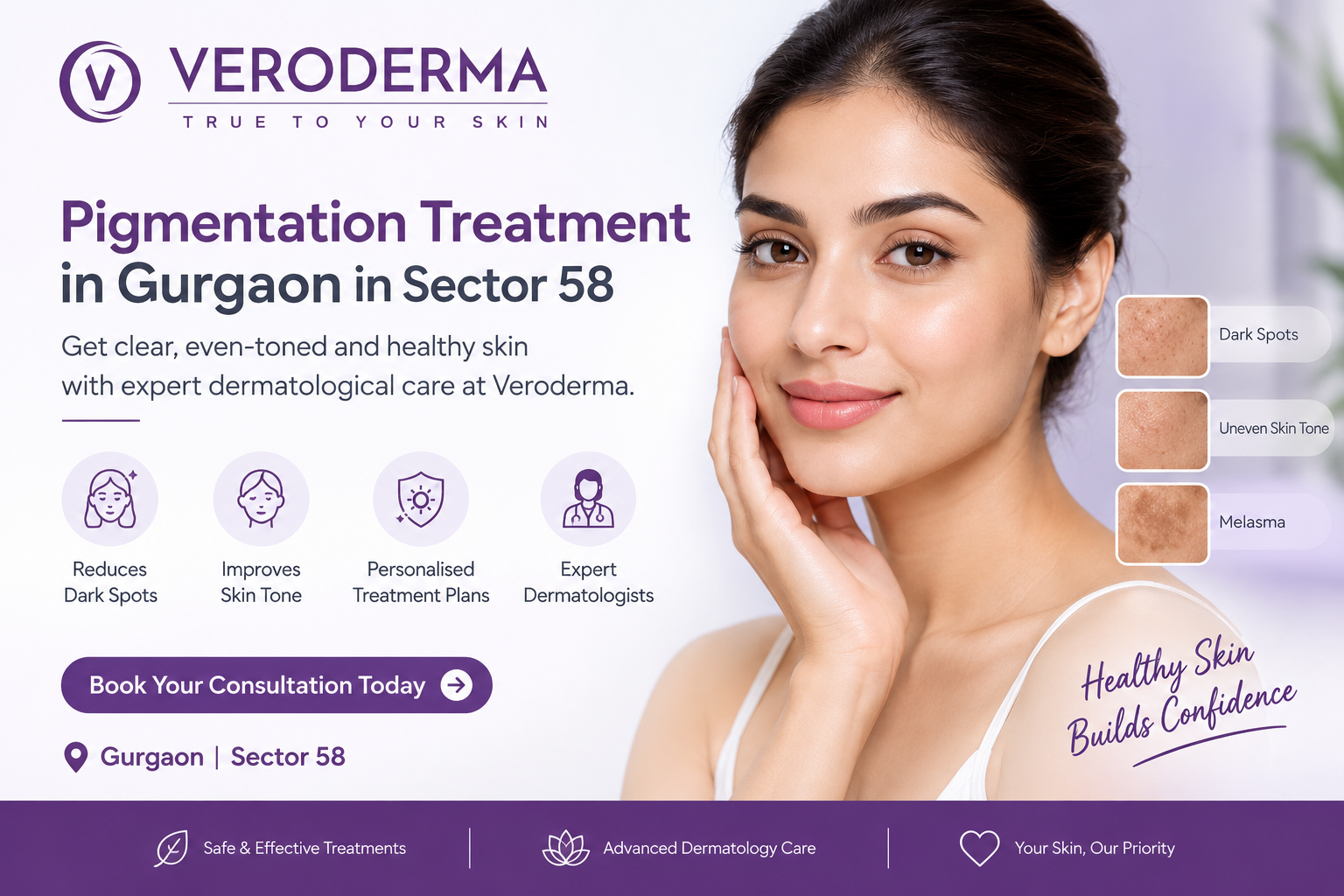
Pigmentation is a common skin concern that can affect people of different ages and skin types. Dark spots, uneven skin tone, sunspots, and patches of discolouration may develop due to sun exposure, hormonal changes, acne, inflammation, or other skin-related factors. These concerns can make the skin appear uneven and may affect a person's confidence.
If you are searching for Pigmentation Treatment in Gurgaon in Sector 58, Veroderma offers a dermatology-focused approach to understanding skin concerns and exploring suitable treatment options. With professional skin assessment and personalised care, the clinic aims to help patients make informed decisions about their skin health.
What Is Skin Pigmentation?
Skin pigmentation refers to the colour of the skin, which is largely determined by melanin, a natural pigment produced by specialised skin cells. When melanin production or distribution becomes uneven, darker areas or patches may appear on the skin.
Pigmentation can develop on the face, forehead, cheeks, upper lip, neck, and other sun-exposed areas. The appearance and cause can vary from person to person, which is why identifying the underlying reason is an important step before choosing a treatment.
Common pigmentation concerns include:
-
Melasma: Brown or grey-brown patches that commonly appear on the face and may be associated with hormonal changes and sun exposure.
-
Sunspots: Dark spots that develop over time due to ultraviolet radiation.
-
Post-inflammatory hyperpigmentation: Dark marks that remain after acne, irritation, or other skin inflammation.
-
Uneven skin tone: Areas of skin that appear darker than the surrounding skin.
Understanding the type of pigmentation helps a dermatologist recommend an appropriate care plan.
What Causes Pigmentation?
Several factors can contribute to pigmentation. Identifying these factors can help patients understand their skin concerns and take steps to reduce further discolouration.
1. Sun Exposure
Exposure to ultraviolet rays can stimulate melanin production and make existing dark spots more noticeable. Daily sun protection is an important part of managing many pigmentation concerns.
2. Hormonal Changes
Hormonal fluctuations, including those associated with pregnancy or certain medications, may contribute to melasma in susceptible individuals.
3. Acne and Skin Inflammation
Acne, picking at pimples, and irritation from unsuitable skin care products can leave dark marks after the inflammation settles. These marks may take months to fade.
4. Incorrect Skin Care Products
Harsh exfoliants, irritating ingredients, and inappropriate home remedies may aggravate the skin and potentially worsen pigmentation. A suitable skin care routine should match your skin type and condition.
Pigmentation Treatment Options at Veroderma
Choosing the right treatment depends on the type, depth, severity, and cause of pigmentation. A dermatologist can assess the affected area and discuss suitable options based on individual skin needs.
People exploring Pigmentation Treatment in Gurgaon in Sector 58 should understand that no single treatment works for every type of pigmentation.
Topical Skin Care Treatments
Depending on the diagnosis, a dermatologist may recommend topical products containing ingredients such as azelaic acid, retinoids, or other pigmentation-targeting agents. These products may help reduce certain types of dark spots over time.
The choice of ingredient, strength, and frequency of use should be guided by a qualified professional to minimise irritation.
Chemical Peels
Certain chemical peels can help improve selected pigmentation concerns by encouraging controlled exfoliation of the skin. The type and strength of the peel must be chosen carefully, particularly for darker skin tones, because irritation can sometimes cause additional pigmentation.
Laser and Light-Based Procedures
Some laser or light-based procedures may be considered for specific pigmentation concerns. However, these treatments are not suitable for everyone and can sometimes worsen discolouration if used incorrectly. A professional assessment is important before proceeding.
Personalised Dermatological Care
A personalised treatment plan may combine appropriate skin care products, sun protection, and selected in-clinic procedures. Results depend on the underlying condition, consistency of treatment, and individual skin response.
At Veroderma, patients can seek professional guidance to understand their skin concerns and discuss suitable options with a dermatologist.
Why Is Sunscreen Important for Pigmentation?
Sun protection is an essential part of managing many pigmentation conditions. Even when using effective skin care products, regular sun exposure may make dark spots more prominent or contribute to recurrence.
Consider these everyday practices:
-
Use a broad-spectrum sunscreen with SPF 30 or higher.
-
Reapply sunscreen approximately every two hours when outdoors, and after swimming or heavy sweating.
-
Wear a hat and seek shade during strong sunlight.
-
Avoid picking pimples or irritating affected areas.
-
Introduce active skin care ingredients gradually and follow professional advice.
People with melasma may also benefit from discussing tinted sunscreens containing iron oxides with their dermatologist, as visible light can contribute to pigmentation in some cases.
How Long Does Pigmentation Treatment Take?
The time required to see improvement varies according to the cause and depth of pigmentation. Some superficial dark marks may gradually fade over several weeks or months, while melasma and deeper pigmentation can require longer-term management.
Consistency is important. Patients should follow the recommended routine, protect their skin from sunlight, and attend follow-up appointments when advised.
It is also important to maintain realistic expectations. Pigmentation may improve significantly, but some conditions can recur and require ongoing care.
When Should You Consult a Dermatologist?
Consider professional advice if pigmentation persists, spreads, returns frequently, or does not respond to your existing skin care routine. A dermatologist can help determine whether the discolouration is related to melasma, acne marks, sun damage, or another condition.
Any new or changing dark spot that has an irregular shape, multiple colours, bleeding, or other unusual features should be medically assessed rather than treated as ordinary pigmentation.
Avoid starting strong bleaching creams or combining multiple active ingredients without professional guidance.
Why Consider Veroderma for Pigmentation Treatment in Gurgaon?
Finding an appropriate skin care solution starts with understanding the cause of your pigmentation. Veroderma provides a dermatology-focused setting where patients can discuss skin concerns, explore suitable treatment approaches, and receive guidance on maintaining healthier-looking skin.
If you are looking for Pigmentation Treatment in Gurgaon in Sector 58, consider arranging a consultation to discuss your skin type, concerns, treatment options, and expected results.
A well-planned approach that combines professional guidance, appropriate skin care, and consistent sun protection can help you work towards a more even-looking complexion.
Conclusion
Pigmentation can develop for several reasons, including sun exposure, hormonal changes, and acne-related inflammation. Since different pigmentation conditions require different approaches, professional assessment is an important step towards choosing suitable care.
Veroderma can be a starting point for people seeking guidance on pigmentation concerns in Gurgaon. By understanding your skin condition, following an appropriate treatment plan, and maintaining daily sun protection, you can take informed steps towards managing uneven skin tone and supporting long-term skin health.
Frequently Asked Questions (FAQs)
Q1. What is pigmentation treatment?
Pigmentation treatment focuses on reducing the appearance of dark spots, uneven skin tone, melasma, and acne-related marks through suitable skin care products and dermatologist-recommended procedures.
Q2. Where can I find Pigmentation Treatment in Gurgaon in Sector 58?
Veroderma is an option to explore for dermatology-focused skin care in Gurgaon. Consult a qualified dermatologist to discuss your pigmentation concerns and suitable treatment options.
Q3. What causes skin pigmentation?
Pigmentation can develop due to sun exposure, hormonal changes, acne, inflammation, certain medications, and other skin conditions.
Q4. Which treatments can help reduce pigmentation?
Depending on the cause, treatment may include topical creams, chemical peels, or selected laser procedures. A dermatologist can recommend an appropriate option after examining your skin.
Q5. How long does pigmentation treatment take to show results?
Results vary depending on the type and depth of pigmentation and the treatment used. Some dark marks may fade over several weeks or months, while conditions such as melasma may require long-term management.
Q6. Is sunscreen important during pigmentation treatment?
Yes. Broad-spectrum sunscreen with SPF 30 or higher helps protect the skin from UV damage and may prevent existing pigmentation from becoming darker.
Q7. Can acne cause pigmentation on the face?
Yes. Acne can leave dark marks known as post-inflammatory hyperpigmentation. These marks may gradually fade with appropriate skin care and sun protection.
Q8. Can pigmentation return after treatment?
Yes. Some conditions, particularly melasma, may recur due to sun exposure, hormonal changes, or other triggers. Consistent sun protection and follow-up care can help manage recurrence.
Q9. Is pigmentation treatment suitable for all skin types?
Treatment options vary by skin type, sensitivity, and pigmentation condition. A dermatologist should assess your skin before recommending products or procedures.
Q10. Why choose Veroderma for pigmentation concerns in Gurgaon?
Veroderma provides a setting to explore dermatological skin care options and discuss pigmentation concerns. A consultation can help you understand suitable treatments, potential risks, and realistic expectations.